
How fast can you deliver during an emergency in South Whittier?
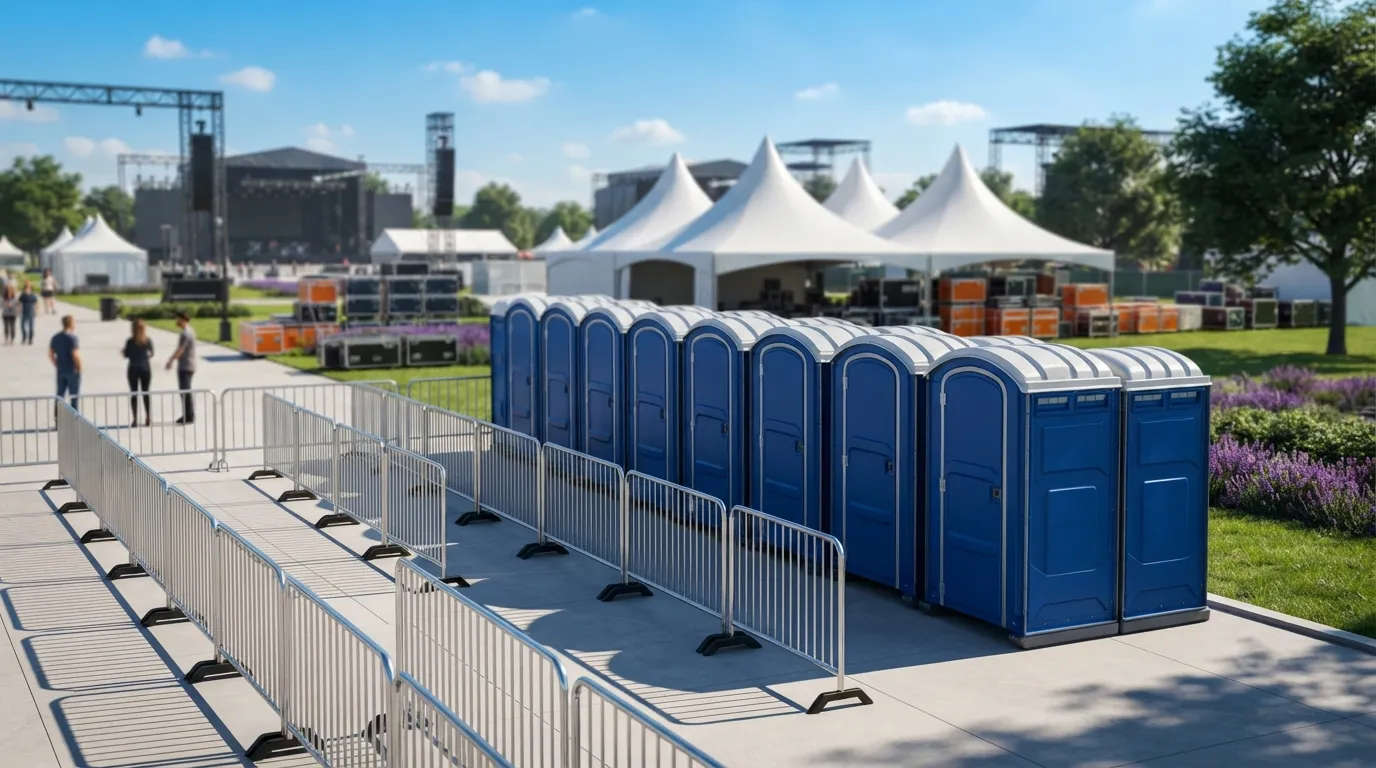
Speed is the whole point of emergency porta potty rental. We keep standard units staged and ready, because disaster response does not wait for a normal delivery window. A standard 44 by 48 inch unit with a 60 to 70 gallon holding tank can be set within hours of a confirmed order, not the next business day. If your address sits along one of the corridors we already service near Santa Fe Springs, 2.4 miles west, or toward La Mirada, 3.0 miles southeast, drive time is short and that matters when a shelter or a command post needs restrooms fast. We also bring handwashing station rental units alongside toilets, because water access is usually the first thing to fail in a disaster. For larger response sites, a restroom trailer rental can go in instead, and our 2 stall restroom trailer fits tighter footprints where a full row of standalone units will not. Coordination on placement runs through porta potty placement guide principles first, then we adjust once your site team tells us where access roads and hazards actually are.
What does disaster relief sanitation cost in South Whittier?
Pricing during an emergency response follows the same bands as a standard rental, but the duration is usually shorter and less predictable, so day and weekend rates apply more often than monthly ones. Here is what falls inside our measured pricing for the unit types most requested during disaster response:
| unit | duration | low | typical | high |
|---|---|---|---|---|
| standard | day | 100 | 150 | 350 |
| standard | weekend | 125 | 250 | 400 |
| ada | day | 200 | 230 | 400 |
| deluxe | day | 85 | 300 | 1200 |
| delivery_fee | day | 100 | 150 | 500 |
A shelter that needs units for just a weekend pays the weekend rate; a longer-term recovery site converts to the monthly porta potty rental rate once the emergency phase passes. Full detail on how these bands work sits on porta potty rental cost and porta potty rental per day. Every disaster order carries at least one ADA accessible porta potty unit, because ADA Standards section 213.2 requires at least 5 percent of clustered single-user units to be accessible, and shelter populations often include people who cannot use a standard step-up unit. That standard applies whether it is a construction job or a relief site, and we do not skip it under pressure.
Do you provide handwashing and septic support during a disaster response?
Yes. A relief site is rarely just toilets. We pair units with portable sink rental stations and hand sanitizer station rental dispensers depending on what the site coordinator wants, and 29 CFR 1910.141(d)(2) is clear that soap and towels or a hand-drying device are required, not sanitizer alone, for any washing facility that's meant to substitute for real handwashing. If a septic system in South Whittier fails during flooding or an earthquake, our septic pumping service and emergency septic service crews respond separately from toilet delivery, often the same day. Signs the tank itself is the problem, not just volume, are covered on septic tank warning signs. Where a household or a shelter has no working tank at all, a holding tank rental covers the gap until the system is repaired or the site closes. For debris cleanup that follows storm or fire damage, a roll-off dumpster rental clears wreckage fast, and what cannot go in a dumpster matters more than usual in a disaster, since hazardous debris needs separate handling. Larger recovery operations sometimes also need short-term storage container rental for supplies or a mobile office trailer rental to run command out of. OSHA 1926.51(c) sets toilet ratios by headcount for any workforce clearing or rebuilding a site, one seat per 20 workers up to a point, and that ratio does not change just because the work started as an emergency. We size the order against that number every time, whether the crew is five people or fifty, and we adjust units up as headcount grows through the response.
How many units does a shelter or command post actually need?
Start with headcount and OSHA 1926.51(c): 1 toilet per 20 people covers most short-term sites. A 100 person shelter needs roughly 5 units minimum, more if meals or medical intake add foot traffic. Our how many porta potties do i need guide walks through the math for mixed-use sites.
Can you deliver to a site with damaged or blocked access roads?
Often, yes, but tell us before the truck rolls. A roll-off or trailer delivery needs about 60 feet of straight clearance behind the truck, and debris or a collapsed curb can block that. We will scout an alternate placement rather than turn back.
Do disaster relief units get serviced as often as regular rentals?
Yes, and usually more. ANSI/PSAI Z4.3 sets one service visit per week for up to 10 users over 40 hours as a baseline, but shelter-level traffic runs well past that, so we service daily or every other day during active response.
What if the disaster site has no clear address yet?
Give us the nearest cross street or landmark in South Whittier and we will confirm placement on arrival. This happens often enough in early-stage response that our drivers expect it.
Will insurance or FEMA reimbursement affect how you invoice?
We invoice per the standard day, weekend, or monthly rate structure regardless of who is paying. Ask our office through request a quote or contact about itemized invoices if your reimbursement process needs one.
Next step
Get a delivery date
Tell us the address, the dates and the headcount. We size the order and confirm the route.